All right, let’s dive into the murky waters of backend software design, shall we? This isn’t just about code; it’s about power, money, and the soul-crushing reality facing developers today. Forget the shiny brochures and the tech evangelists with their perfectly coiffed hair; we’re peeling back the layers to expose the truth.
Monolith vs. Microservices: The Architecture Debate That Became a Commercial Shill
For years, the industry—prodded, pushed, and practically bribed by the behemoths of cloud computing—has rammed the “microservices” mantra down our throats. It became an unquestionable dogma, a sacred cow that promised scale, flexibility, and engineering nirvana. We were told, with the unwavering certainty of a televangelist selling snake oil, that anything less was prehistoric, inefficient, and utterly backward. And like good little acolytes, many swallowed it whole.
But what has this “all-in on microservices” hell really wrought? It’s a distributed nightmare, a tangled web of services, each with its own deployment pipeline, its own database, its own set of inscrutable dependencies. It’s like trying to navigate a city where every single building has its own power grid, its own water supply, and its own chaotic mayor.
The promised flexibility? It often morphs into an operational quagmire, a dizzying array of potential failure points that require an army of highly paid engineers just to keep the lights on. The elegance of a single, coherent system is replaced by the maddening complexity of a thousand tiny, squabbling fiefdoms.
The Microservices Lie: How AWS Saved 90% With the Monolith They Didn’t Want You to See
Remember the whispers from AWS Prime Video? The heresy they briefly dared to utter? That their EC2 monolith saved them a staggering 90% in costs and simplified operations?
It was a fleeting moment of truth, a crack in the corporate facade, quickly whitewashed away because, of course, it contradicted the very narrative that fuels the cloud-industrial complex. Why would Amazon want you to build something simpler, cheaper, and more efficient when they can sell you a thousand different services to manage your infinitely complex microservices architecture? The answer, my friends, is as old as capitalism itself: profit.
True Cost of Fragmentation: Complexity, Scattered Code, No Data Control, Long Big Bills
This isn’t just a backend problem; it’s a systemic rot. Look at mobile game development, a sector choked by the same insidious trend. Developers are forced to integrate 10, 20, even 30 different SDKs just to cobble together basic backend functionality, marketing tools, DevOps, and live operations. Each SDK is another leash, another vendor, another potential point of failure, another opaque black box sucking up resources and spewing out data you barely control.
It’s a Frankenstein’s monster of proprietary blobs, each demanding its pound of flesh, each locking you further into a labyrinth of dependencies.
This is not innovation; it’s obfuscation. It’s a deliberate strategy to create complexity, to ensure you remain dependent on an endless stream of expensive “solutions” that promise to solve the very problems they helped create. They sell you the shovels, then they sell you the dirt, and then they sell you the army of consultants to dig you out of the hole.
From SDK Soup to MagDB: The Case for a Unified Game Backend
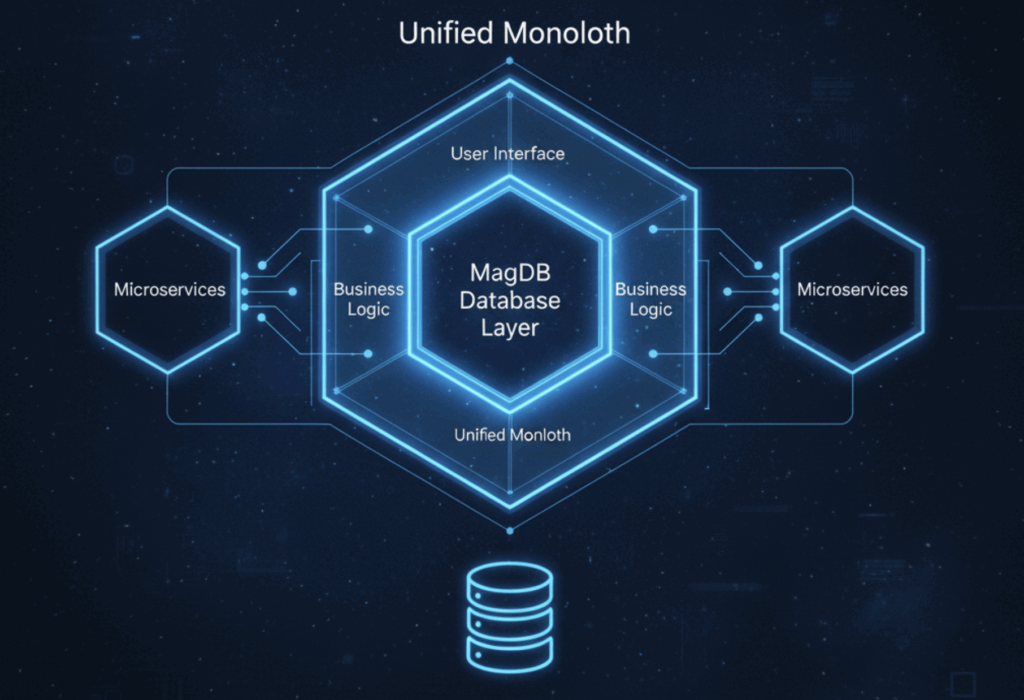
But there is another way. A path forged not by buzzwords and venture capital, but by deliberate design and a genuine commitment to empowering developers. This is the vision behind PULSE. Imagine a unified monolith, not the creaking, monolithic beasts of yesteryear, but a meticulously crafted system. It’s built on a transparent, yet powerful stack, leveraging reliable open-source enterprise technology combined with modern programming paradigms for unparalleled scale and efficiency.
At its heart lies the MagDB database layer, a testament to thoughtful engineering. This isn’t about throwing money at an ever-expanding cloud bill; it’s about intelligent architecture. PULSE aims to free developers from the tyranny of bloated, proprietary backends, from that unholy soup of SDKs and big tech cloud services that shackle customers to expensive, complicated solutions.
These “solutions” promise infinite scale but deliver endless headaches, demanding an army of engineers, decades of expertise, and a boatload of VC money just to keep the machine grinding.
We believe in a future where developers can focus on what they do best: creating incredible experiences, not battling opaque APIs and spiraling infrastructure costs. PULSE is about taking back control, offering a meticulously designed, performant, and transparent alternative to the commercial shills and trend-chasing that have plagued our industry for far too long. It’s time to build smarter, not just bigger. It’s time to choose deliberate design over vendor lock-in.