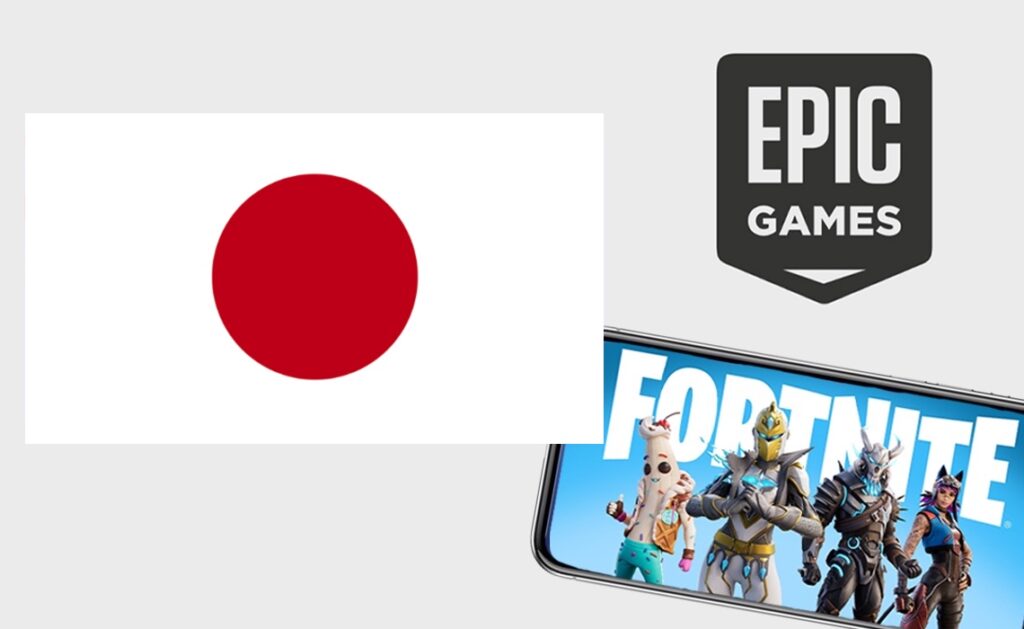
If you want to understand the future of mobile, watch Japan. It’s the world’s third-largest app economy by consumer spend, a country where iOS dominates and mobile games are practically a national pastime. And now, Japan is doing what only the EU and UK have done before: forcing Apple (and Google) to open the gates.
This isn’t just “some new rule.” It’s a structural rewrite of how money, risk, and power flow across the smartphone stack. And it lands in a market where Apple is unusually strong and gaming ARPU is unusually high. That combination makes Japan the most consequential test yet of what happens when the walled garden gets new gates.
The policy: Japan’s Smartphone Software Act, in plain English
Japan’s Act on Promotion of Competition for Specified Smartphone Software (often shortened to SSCPA or the “Smartphone Act”) passed in June 2024. The law empowers the Japan Fair Trade Commission (JFTC) to designate Apple, Google and others as “Designated Providers,” then impose hard obligations: allow alternative app stores, allow alternative payment systems, end anti-steering, curb self-preferencing, erect data firewalls, and report annually on compliance. The law must enter into force within 18 months of promulgation—which is why enforcement is lining up for late 2025. Japan Fair Trade Commission
Two things make Japan’s regime bite:
-
Meaningful penalties. Violations can draw fines of 20% of domestic revenue from the offending service—30% for repeat offenses. That’s far stiffer than legacy Japanese antitrust penalties, and broadly in the DMA/UK ballpark. Silicon UK | Android Authority | Open Web Advocacy
-
Clear roadmap. The JFTC has already designated the relevant software categories and published draft/working guidelines to operationalize the rules; ministries finalized the designation scope in March 2025 and the JFTC issued guideline translations in mid-2025 as it preps full enforcement by year-end. Japan Fair Trade Commission| PYMNTS.com
And the signal developers heard? Epic says Fortnite and the Epic Games Store will launch on iOS in Japan in “late 2025.” That’s the industry circling a date on the calendar. The Scottish Sun
Why Japan is the hard test for Apple
iOS is the majority platform here. As of July 2025, iOS holds ~64% of Japan’s mobile OS share (Android ~36%). That matters because an “open iOS” in Japan exposes a larger, higher-spending audience than in most markets. StatCounter Global Stats
Consumer spend is massive and game-heavy. Japan’s app economy registered $17.9B in consumer spend in 2023; mobile game IAP revenue alone hit $5.3B in 1H 2024 (despite currency headwinds). The App Store accounts for the majority of game downloads in Japan, and RPGs command nearly 49% of game spend—exactly the kind of titles that thrive on direct-to-consumer economics. Sensor Tower | Mobile app trends 2024: Japan edition
Those two facts—iOS dominance plus high-value game spend—magnify whatever competitive opening the law creates.
The EU’s cautionary tale—and why Japan could diverge
The EU’s DMA already cracked iOS open, but Apple’s Core Technology Fee (CTF) and a web of new “store services” fees have slowed real adoption of alternative stores. Under Apple’s EU terms, many developers face €0.50 per first annual install beyond a one-million threshold, plus combinations of commissions and acquisition fees depending on the path they pick. The European Commission is probing whether those fees blunt the DMA’s goals. Apple | Apple Developer | TechCrunch
Japan’s law doesn’t prescribe Apple-style CTFs; it prohibits discriminatory or obstructive terms and backs that up with revenue-based fines. If Apple were to replicate EU-style fee structures in Japan and the JFTC deems them a barrier to effective competition, enforcement risk is real. That single difference—no built-in tolerance for a CTF—could make Japan’s opening materially less frictioned for new stores and processors than the EU’s. (To be clear: the exact Japanese fee/term outcomes will come from JFTC designations and ensuing enforcement, but the statute’s posture is less permissive of “open, but taxed” workarounds.) Japan Fair Trade Commission | Silicon UK
What moves first: distribution, payments, or both?
Distribution. Epic’s stated plan is to ship its Epic Games Store on iOS in Japan. Expect other game-centric stores (regional publishers, PC-to-mobile cross-stores) to follow. Because Japan’s top-grossing titles skew RPG and gacha—audiences that already accept off-platform communities and direct events—store migration costs are lower than for casual apps. The Scottish Sun | Mobile app trends 2024: Japan edition
Payments. Anti-steering and third-party payments change the take-rate math. In the EU, developers can mix and match—but run into Apple’s fees. If Japan’s enforcement curbs equivalent fee stacks, net take rates could drop by double digits for developers that can move whales to direct billing. That’s where the real margin shifts live. Apple | Japan Fair Trade Commission
How fast does the Japanese market actually shift?
Let’s be conservative and scenario this out using public data:
Baseline: $17.9B total consumer spend (2023). Mobile game IAP: $5.3B in 1H24, implying roughly $10–11B annualized for games (exchange swings aside). iOS share ~64% of devices. Sensor Tower | StatCounter Global Stats
Year 1 after enforcement (late 2025 → late 2026)
-
Adoption friction exists (new stores, trust, UX prompts). Assume 5–10% of iOS game spend migrates to third-party stores or external billing. That’s ~$320M–$700M flowing outside Apple’s 30/15% rails—or renegotiated at meaningfully lower rates. (This is slower than many hoped in the EU but faster than the EU is trending, because Japan’s rules are less fee-constrained and gaming is more concentrated.) Reasoning: EU’s CTF slowed store uptake; Japan’s penalties/terms raise the cost of friction. TechCrunch| Silicon UK
Year 2 (late 2026 → late 2027)
-
If Epic and one or two credible peers build real catalogs, migration could reach 15–25% of iOS game spend. On a steady ~$10–11B games base, that’s ~$1.0B–$1.8B shifting channels. Developers’ effective take rates improve; Apple’s services revenue mix in Japan compresses—unless Apple wins enough users back via improved App Store economics. Sensor Tower
These aren’t predictions; they’re guardrails based on adoption curves we’ve seen when distribution power loosens in a high-ARPU market. The key swing factor is whether Apple’s Japanese terms resemble the EU’s fee labyrinth (slower shift) or something closer to true neutrality (faster shift). Apple Developer
Who gains, who loses
Winners
-
Game publishers with loyal IP: Final Fantasy-style RPGs and gacha hits can move high-value users to lower-fee rails, capture email, and control events. Japan’s spend profile amplifies this. Mobile app trends 2024: Japan edition
-
Payment processors: If external payments scale, PSPs and wallets take slices Apple used to own.
-
Consumers: Expect price experiments—10–15% cheaper IAPs off-store—and more cross-platform bundles. (We’ve already seen EU developers run A/Bs where fees allow passing some savings through.) AppsFlyer
Losers (or at least pressured)
-
Apple’s Japan services line: Even a 5–10% diversion of iOS game spend dings the high-margin App Store take. Multiply by Japan’s outsized iOS share and it matters.
-
Mid-tail apps without brands: Discovery is hard off-store. If you don’t have a fandom, the App Store’s built-in traffic is still the cheapest funnel.
The global echo
Japan’s move adds another regulatory pole alongside the EU and UK. Each pole is slightly different: the EU allowed Apple’s CTF (for now); the UK’s DMCC opts for case-specific “conduct requirements”; Japan leans ex-ante with revenue-linked fines. As more poles align, Apple’s ability to maintain one global commercial model erodes. In practice, that means regional app economics: Europe terms, Japan terms, UK terms—each shaping where big developers launch new stores first.
And there’s a feed-through: once Japanese users get used to alternative stores and payment links, U.S. policy debates get fresh evidence—real consumer outcomes in a mature, iOS-heavy market. The “security vs. competition” argument will be informed less by hypotheticals and more by Japanese data.
What to do if you’re…
A game publisher with a Japan hit:
Spin up a Japan-specific distribution plan now. Model three lanes: (1) App Store status quo; (2) App Store with external payments; (3) Third-party store listing. Build your LTV sensitivity to fees and funnel friction. If you have whales, the payments lane alone could move margin.
A fintech/PSP:
Localize for JFTC expectations (consumer disclosures, refunds, youth protections). Expect Apple to emphasize safety guardrails; your compliance posture is a competitive feature.
Apple:
Two options: lean into EU-style fee architecture (risking JFTC challenges), or compete on product—better discovery for games, lower effective take for certain categories, and a Japan-tailored trust UX that makes “stick with App Store” the easiest choice. The latter is healthier—and likelier to scale globally.
The bottom line
Japan is about to run the most telling experiment yet on whether opening iOS actually shifts money, not just policy memos. The ingredients are all there: an iOS-first market (~64% share), $17.9B in annual app spend, RPG-heavy monetization, and a regulator with 20–30% revenue fines in its toolkit. If Epic and others execute, a double-digit share of iOS game revenue could reroute within two years—redefining mobile commerce in the one market Apple can least afford to treat as an edge case.
Sources & further reading
-
JFTC press release and law timing: act passed 6/12/2024; enforcement within 18 months. Japan Fair Trade Commission
-
JFTC outline and (tentative) guideline translations. Japan Fair Trade Commission
-
Penalties (20–30% of domestic revenue) across multiple explainers. Silicon UK | Android Authority | Open Web Advocacy
-
iOS market share in Japan (StatCounter, July 2025). StatCounter Global Stats
-
Japan app spend and gaming revenue mix (Sensor Tower). Sensor Tower
-
Epic plans for iOS in Japan in late 2025. The Scottish Sun
-
EU comparator: Apple’s DMA terms & Core Technology Fee. Apple | Apple Developer